
Meet the Meteorologist!
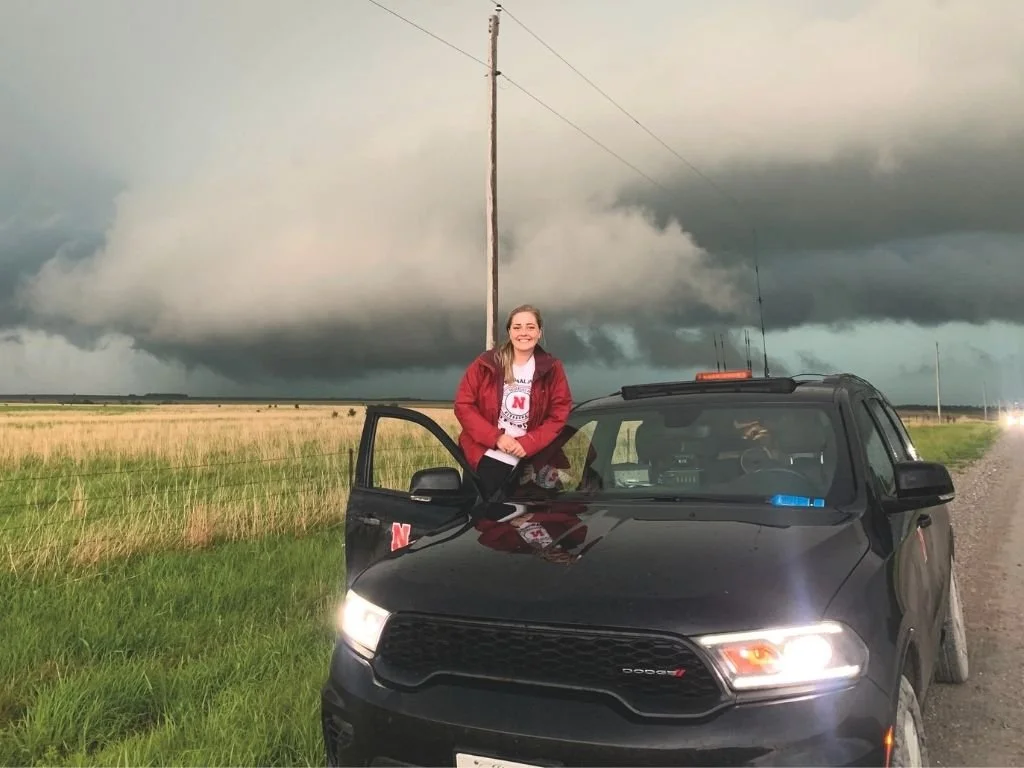
By Jessica Blum, Meteorologist at 10/11 NOW
Have you ever looked up at the sky and wondered, “Why do clouds look like that?” or “How do we know when a storm is coming?” Learn from Jessica Blum, a Lincoln meteorologist and streaming anchor who turned her weather curiosities into an exciting career! Let’s step into the world of weather, clouds, and sky science with Jessica as our guide.
From Sixth Grade Curiosity to Weather Expert
Jessica’s love for weather started early when she was in sixth grade science class. She enjoyed going outside with her classmates to learn about the weather and conduct different experiments. Watching the evening news at home, she liked to compare weather forecasts from different Omaha TV stations to see who would guess the weather correctly. When she realized she had a passion for math, science, and weather, she went on to study meteorology at the University of Nebraska-Lincoln, where she learned how to predict weather.
Weather Jessica Finds the Most Interesting
Jessica’s favorite kind of weather to study is impactful weather—the kind that really affects people’s lives. In Nebraska, these are often snowstorms in the winter and severe thunderstorms in spring and summer. “I also enjoy tracking hurricanes and watching how big weather patterns connect across the country,” says Jessica.
Floating Cues in the Sky
Even though they are pretty shapes, clouds can also be important weather clues! This is how they form:
The sun heats up water in lakes, rivers, oceans, and even puddles!
Warm water turns into an invisible gas, called water vapor, and rises into the air.
Higher up, the air gets cooler.
The vapor cools down and turns back into tiny water drops or ice.
Those tiny pieces clump together and form a cloud!
Clouds change shape depending on how high they are in the sky, how much water they hold, and how the wind pushes and stretches them. Some clouds mean fair weather, while others are a big flashing sign that storms are coming!
How do Meteorologists Predict the Weather?
Predicting the weather isn’t guesswork! “I use a combination of observations, instruments, satellites, computer models, and historical data to discuss current and future conditions,” Jessica says. By combining all these clues, meteorologists can predict what the weather will be like tomorrow. Or even up to a week ahead! Jessica shares that forecasts are most reliable four to five days out. Temperatures are easier to predict than storms, and severe storms and winter weather often need last-minute updates—even the day they happen. Nebraska weather changes fast, which makes predicting it extra challenging, but exciting!
Storm Signs to Look Out For
Storms usually give clues before they arrive: clouds growing darker and taller, wind speeds changing, the air feeling heavy or warm, or birds going quiet. Sounds of thunder or the sight of lightning far away are sure signs it’s time to head inside.
Storms can be loud and scary, but knowing what to do helps keep you safe. As the saying goes, “when thunder roars, go indoors!” During a storm it’s safest to stay inside. Stay away from doors and windows and listen to adults and weather alerts! If you are stuck outside, avoid trees and metal. After a storm, watch out for any fallen trees or power lines.
Want to Be a Meteorologist Someday?
Jessica loves teaching others about weather just as much as predicting it. She enjoys visiting schools, sharing cool weather videos, and showing kids how exciting and powerful weather can be—especially in Nebraska, where the weather is always changing!
Focus on math and science and stay curious about the world if you want to explore meteorology or atmospheric science programs in college! Weather science can take you anywhere. Next time you see clouds forming or snow falling, remember: the sky is telling a story. And one day, you might be the one explaining it.
Types of Clouds You Should Know
Next time you’re outside, look up and see if you can spot these clouds:
Cumulus - Big, white fluffy clouds that usually mean nice weather.
Stratus - Flat, gray clouds that cover the sky and often bring cloudy days or drizzle.
Cirrus - Thin, feather-like clouds that are high in the sky, meaning the weather might change soon.
Cumulonimbus - Tall, dark towers of clouds. These are storm clouds and can bring thunder, lightning, hail, or heavy rain.
Watch vs. Warning
Jessica has a simple way to explain the difference between a storm watch and a storm warning—using cupcakes:
Storm Watch
All the ingredients are ready, like eggs, milk, and flour. But the cupcake isn’t baked yet. Storms might happen.
Storm Warning
The cupcake is baked and decorated! The storm is happening or about to happen. Take action now!
Storm “ingredients” include warm air, moisture, rising air, and changing winds. When they mix just right, storms can form.