
More Than Just a Meal: Learn How Food Fort is Feeding Lincoln’s Youth
Something special happens during typical evenings in Lincoln neighborhoods. Around 5:30 PM on Mondays, Tuesdays, and Wednesdays, families begin to gather. Kids run up with excitement as volunteers greet familiar faces. At the center of it all is something simple—a meal—but there is something much more than a meal being served.
Food Fort is a local nonprofit celebrating 10 years of serving Lincoln youth and families. Since launching on October 16, 2016, Food Fort has been distributing food to youth and families around town. While food is a central part of what they do, Executive Director Michaela Akridge explains that it’s only the beginning. Food Fort focuses on food security. They use food as a way to build something deeper: relationships with youth who may not otherwise have consistent support in their lives.
Meeting Kids Where They Are
Food Fort was intentionally designed as a mobile organization. Instead of asking families to come to them, they bring meals, mentorship, and resources directly to Lincoln neighborhoods. Each week, their bus and team show up in neighborhoods including Clinton, West Lincoln, and Saratoga, often parked next to elementary schools to make access easy and familiar. They will soon be expanding to a fourth location.
The team at Food Fort knows that consistency matters. For many kids, Food Fort isn’t just a place to grab dinner. It’s where they build relationships with trusted adults. “It’s the same faces each week,” Michaela shared. “Kids know they can check in with someone, talk about what’s going on, or even bring homework they need help with.”
What “More Than Just A Meal” Really Means
Food Fort’s mission—more than just a meal—comes to life the moment the kids arrive. They’re served a meal, but what happens next is what makes all the difference. Kids stick around, they spend time together, they connect with trusted adults, and they build relationships that grow week after week. That consistency creates space for real impact—whether it is encouragement after a tough day, getting caught up on missing assignments, or taking accountability for schoolwork.
Michaela explained, “If last week a student had ten missing assignments, they might come back with a few assignments the next week to work on together and get completed.” Food Fort is about showing up and working together.
Four Programs, One Mission
While the bus is the most visible part of Food Fort, its work extends to several key programs that support kids in multiple ways.
The Bus Program focuses on providing food security through meals and creating a consistent place to come together for youth and families.
The Treetop Program centers on education. Volunteer tutors, some of whom are bilingual, help in teaching English to students, work with students to set academic goals, and help them reach their goals. Their support is personalized and relationship-driven.
The Giving Garden Program looks like a free produce stand but functions as something more. Families can “shop” for fresh fruits and vegetables while also receiving recipe cards and food education, thanks to partnerships with local organizations like Nebraska Extension. It has become a natural place for connecting with adults in the community.
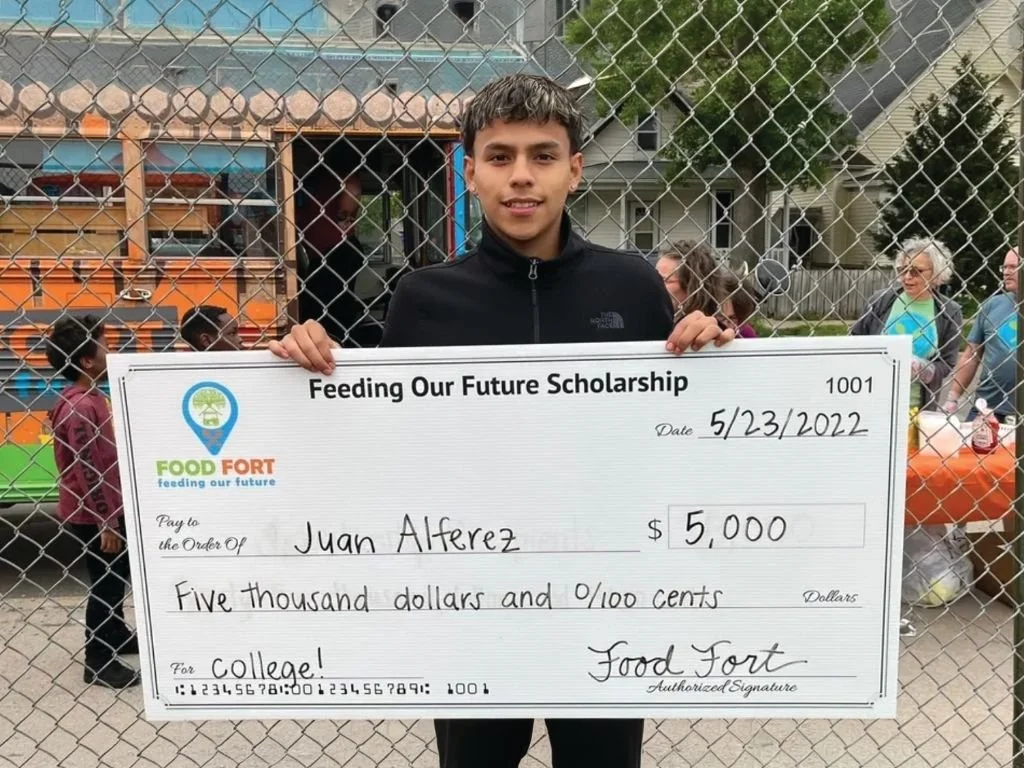
Feeding Our Future Scholarship is now in its fourth year. This program supports students as they transition into adulthood. Many of them are first-generation, high school graduates, and college students, which helps them get on their feet for life after graduation. Six students are currently enrolled in the scholarship program, and the support goes beyond financial assistance. Food Fort stays connected through regular check-ins, texts, and meetups over coffee or a meal, helping students navigate everything from financial aid to the challenges of college life.
A Story of Growth
Juan, one of the students in the scholarship program, first connected with Food Fort in 2016. Growing up in a single-parent household after immigrating to the United States, he worked hard to help support his family.
Over seven years, Food Fort became a consistent presence in his life. Later, Juan became a recipient of the Feeding Our Future Scholarship—continuing his journey that Food Fort had been part of from the start. His story reflects what makes this organization so important: long-term relationships that grow alongside the kids they serve.
A Welcoming Space Powered by Community
Every Food Fort stop has an intentional focus on safety and trust. All staff working directly with children inside the Food Fort bus are background-checked. Meals are available to anyone, including parents and those experiencing homelessness. However, the youth programming remains a protected and structured environment.
“I hope kids feel valued, cared for, and safe,” Michaela added, “and that they have people they can rely on and trust for whatever they’re navigating.”
Why It Matters
Despite its growing impact, Food Fort operates with a small but dedicated team: two full-time staff members, three part-time staff, and approximately 45 volunteers. Community support is essential.
Food Fort is addressing needs that aren’t always visible, such as food insecurity, academic challenges, and a lack of consistent adult support. Instead of tackling those issues one by one, they’ve created a solution that is holistic—where food, education, and relationships all work together. Sometimes, what a child needs most isn’t just a meal. That’s exactly what Food Fort is doing.
From volunteering time to providing financial support, the Lincoln community plays a direct role in making the work of Food Fort possible. For those who want to get involved, opportunities are always available at lincolnfoodfort.org.