
Meet the Fossil Detective!
How one kid’s love for dinosaurs turned into a dream job at Morrill Hall.
JEREMY MCMULLIN, HIGHWAY SALVAGE PREPARATOR AT MORRILL HALL
If you’ve ever picked up a funny-looking rock and thought, “What if this is a dinosaur bone?” you’re not alone. Jeremy had the exact same thought—all the time.
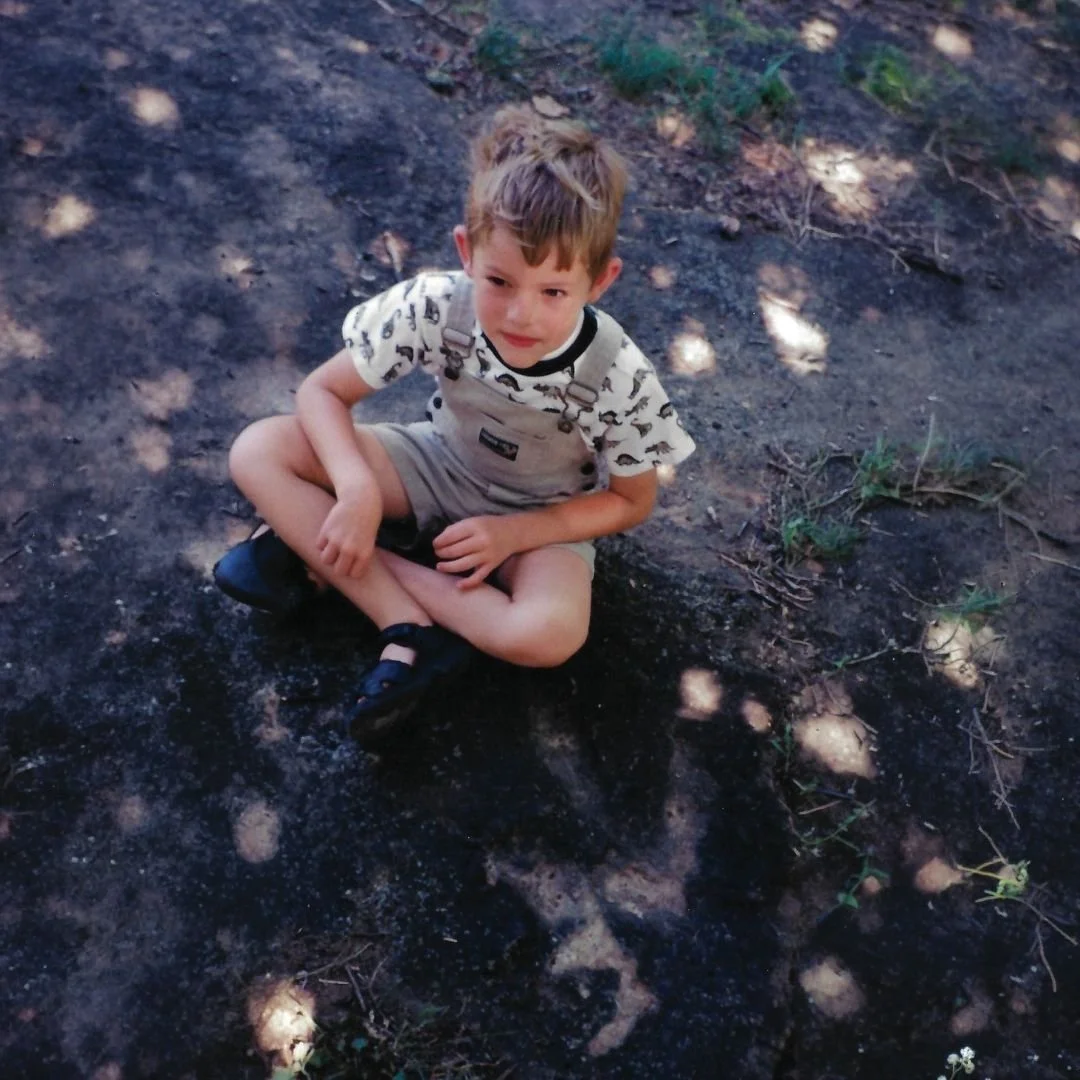
“When I was little, everything was a dinosaur,” he laughed. A cracked sidewalk? Maybe a fossil. A weird-shaped rock? Definitely a dinosaur skull (or so he hoped). His parents’ barn even became home to his growing collection of “fossils.”
Unfortunately, most of them weren’t actually fossils. But one day, when Jeremy was just six years old, he spotted something unusual on a family farm. It looked like a footprint pressed into the rock. Everyone else brushed it off until a geologist in the family took a closer look. Jeremy was right!
It really was a dinosaur footprint—and not just one! His family eventually found at least 22 dinosaur tracks, the only known dinosaur footprints ever discovered in Nebraska. Today, they’re on display at Morrill Hall, where Jeremy now works.
“Keep your eyes open. You might find something really interesting—or really important!”
Talk about a full-circle moment!
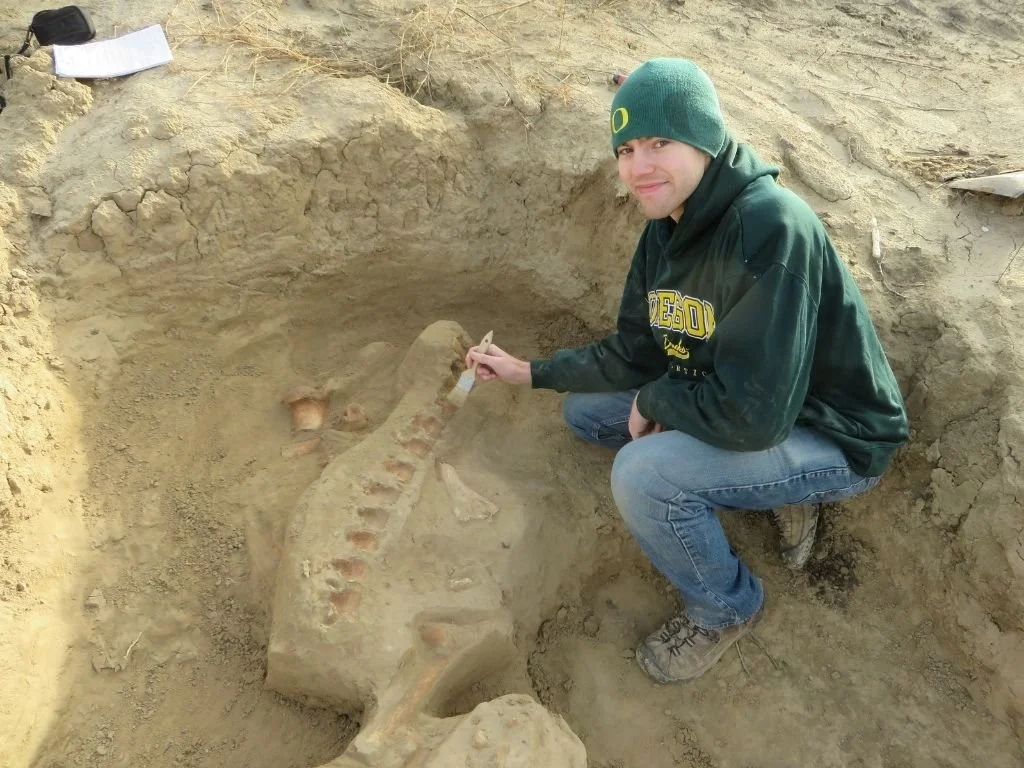
Today, Jeremy works for the University of Nebraska State Museum’s Highway Paleontology Program as a Highway Salvage Preparator. That means he’s one of the people who carefully cleans, repairs, and protects fossils after they’re discovered.
Think of it like being part scientist, part artist, and part puzzle expert.
His Job Rocks
When fossils are discovered, they’re usually covered or encased in rock. Jeremy uses tiny tools to carefully chip away the rock, uncovering the fossil hidden inside. If any pieces have cracked or broken over the millions of years since the fossil formed, he carefully glues them back together. Once it’s cleaned and repaired, Jeremy labels the fossil so scientists know exactly where and when it was found. Then it’s ready for researchers to study—or even to be displayed for others to enjoy.
Jeremy’s favorite part of the job is getting to see something no one else has ever seen before.
“When we first dig out a fossil, we only expose a little bit of it,” Jeremy says. “We find the edges and get a good idea of what we think it is. Then, when I remove all the rock from it, I’m the first person in human history to see that fossil. I think that’s really cool.”
Life is a Highway
So where do all these fossils come from? Surprisingly, many are found during highway construction projects.
When crews build or repair roads, giant machines peel away layers of dirt that have been hiding things underground for years and years. Jeremy and his team visit more than 100 construction sites annually, looking for anything the heavy equipment might have uncovered. Sometimes it’s just a quick stop. Other times, they discover something incredible!
Even though dinosaurs tend to get most of the attention, Nebraska has all kinds of ancient fossils. Millions of years ago, much of our state was actually covered by a giant ocean! Fossils of sharks, giant sea reptiles, and many other prehistoric animals have all been discovered here. It’s crazy to think that over all those years, Nebraska slowly changed into the grasslands we know today.
More at Morrill Hall
Here’s another fun fact: if you’ve visited Morrill Hall, you’ve only seen a tiny fraction of the museum’s fossils.
The museum actually cares for more than 1.5 million fossils, and fewer than 1% are on display. The rest are stored safely in research collections and given their own identification number—almost like a fossil library—so scientists can always trace where they came from.
Jeremy hopes kids who dream of becoming paleontologists never stop asking questions.
“Stay curious,” he says. “Keep exploring. Keep learning. Keep looking down at the ground every once in a while.”
After all, that’s exactly how one curious six-year-old found Nebraska’s only known dinosaur footprints—and ended up with one of the coolest jobs in the state!
How do footprints become fossils?
It all starts when an animal steps into soft, wet mud or sand, leaving behind a footprint. If that footprint dries and gets covered by more mud or sand before it washes away, it can stay protected. Over millions of years, the layers above press down, and minerals turn the mud into rock. Eventually, wind and rain wear away the rock on top, revealing the ancient footprint for us to discover!