
Summer with the Junior Saltdogs!
BY NATHAN LAKE, WRITER FOR LINCOLN KIDS AND JUNIOR SALTDOGS COACH
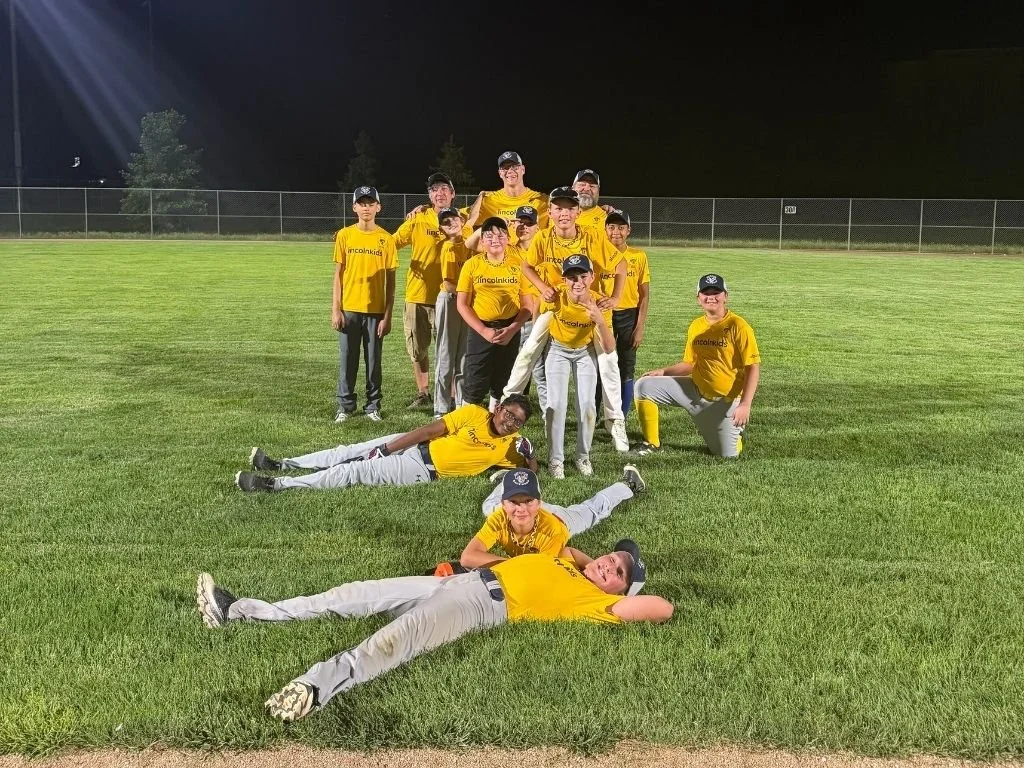
This past summer, I was lucky to coach the Lincoln Kids 11- and 12-year-old team in the Junior Saltdogs program. The team, made up of 5th and 6th graders, included my son, Broderick. Little League baseball is a special thing to be part of, and the best part was watching this group of kids become a team. The wins were fun, and the losses taught us plenty, but the season, for me, gave me a new perspective on teamwork and what it means to show up for each other.
Resilience
Baseball is hard. The best players in the world get a hit only three times out of ten. At this age, a great hitter might get a hit about half the time. So kids have to learn what every baseball player learns: sometimes you strike out, walk back to the dugout, and get ready for another chance. One swing, one mistake, or one tough inning does not decide the whole game.
On the field, the game starts to feel real. Players are pitching, making smart throws, and learning when to play it safe or take a chance. This is no longer tee ball. The game moves faster, and our first few games showed us that. We had fewer players than other teams, and many of our kids were still getting to know each other. We started the season 0-4.
One Win Changed Everything
With each game and practice, the kids learned each other’s names. They started cheering from the dugout. They picked each other up after mistakes. Our fourth loss ended with the other team winning on a walk-off play. There were tears, but there was also a spark. The kids did not fall apart. They came together.
When we finally won our first game, everything changed. I had spent the season talking about what it means to have your teammate’s back. I kept asking them to cheer louder, support each other, and stay in the game. After that first win, they did it on their own, and we were better because they had been through the losses. That was the moment they became a team.
Confidence Starts Small
The Junior Saltdogs program has a simple code of conduct called “Know Your Role.” Players play. Coaches coach. Umpires umpire. Parents parent.
That rule matters because it keeps the game focused on the kids. It creates a place where they can learn without too much noise around them. Instead of pressure, politics, or arguing, the kids just play baseball.
As a coach, few things are better than watching a player do something for the first time. A first fly ball caught or that first big hit—you can see the tension fall away. Their shoulders lift. Their eyes brighten. They start to believe, “I can do this.”
As the confidence on the Lincoln Kids’ team grew, they became different players and better teammates. They talked in the field. They encouraged the pitcher after a walk. When one of our players hit a home run, they ran out together to celebrate him. Those moments may look small from the stands. For the kids, they are huge.
What the Season Gave Us
In many ways, baseball feels the same as it did when I was a kid. The ball still pops into the glove. The dugout still gets loud. The summer air still feels warm under the lights. Families still gather to watch a simple game. In a world where people can feel pulled in every direction, there is something beautiful about that.
For the kids, it is about baseball. For the parents, it is about watching their child try something hard. For the coaches, it is about teaching what we can and making the season fun along the way. I learned how much that time matters: time with my son, time with his friends, and time spent working together toward something that felt hard at first.
When I look back, I hope the kids remember the fun. I hope they remember that they can do hard things. I hope they remember the friends they made along the way. And I hope, years from now, they remember a few summer nights when baseball brought us all together.